| Origin | Chelsea by the Horse Ferry |
|---|---|
| Date | circa 1735 |


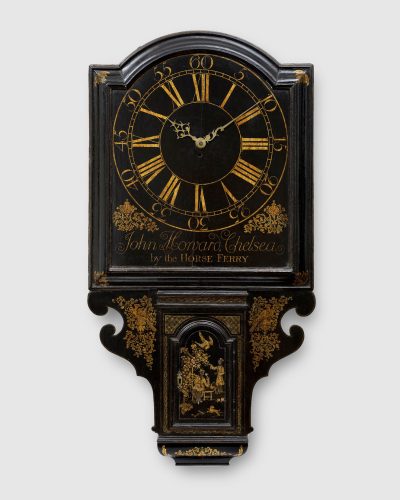
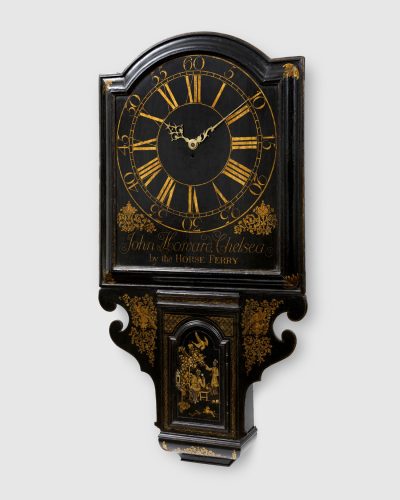
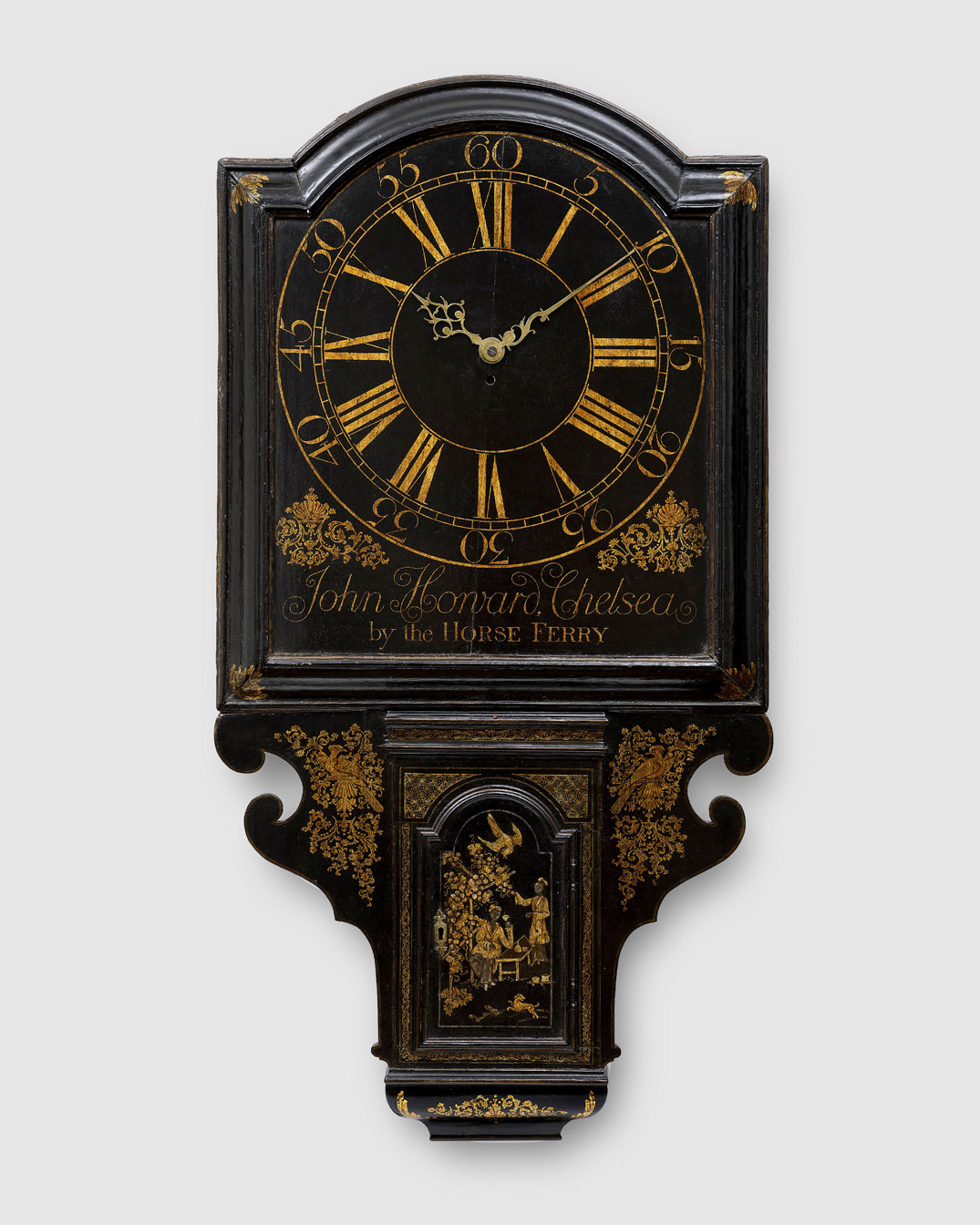
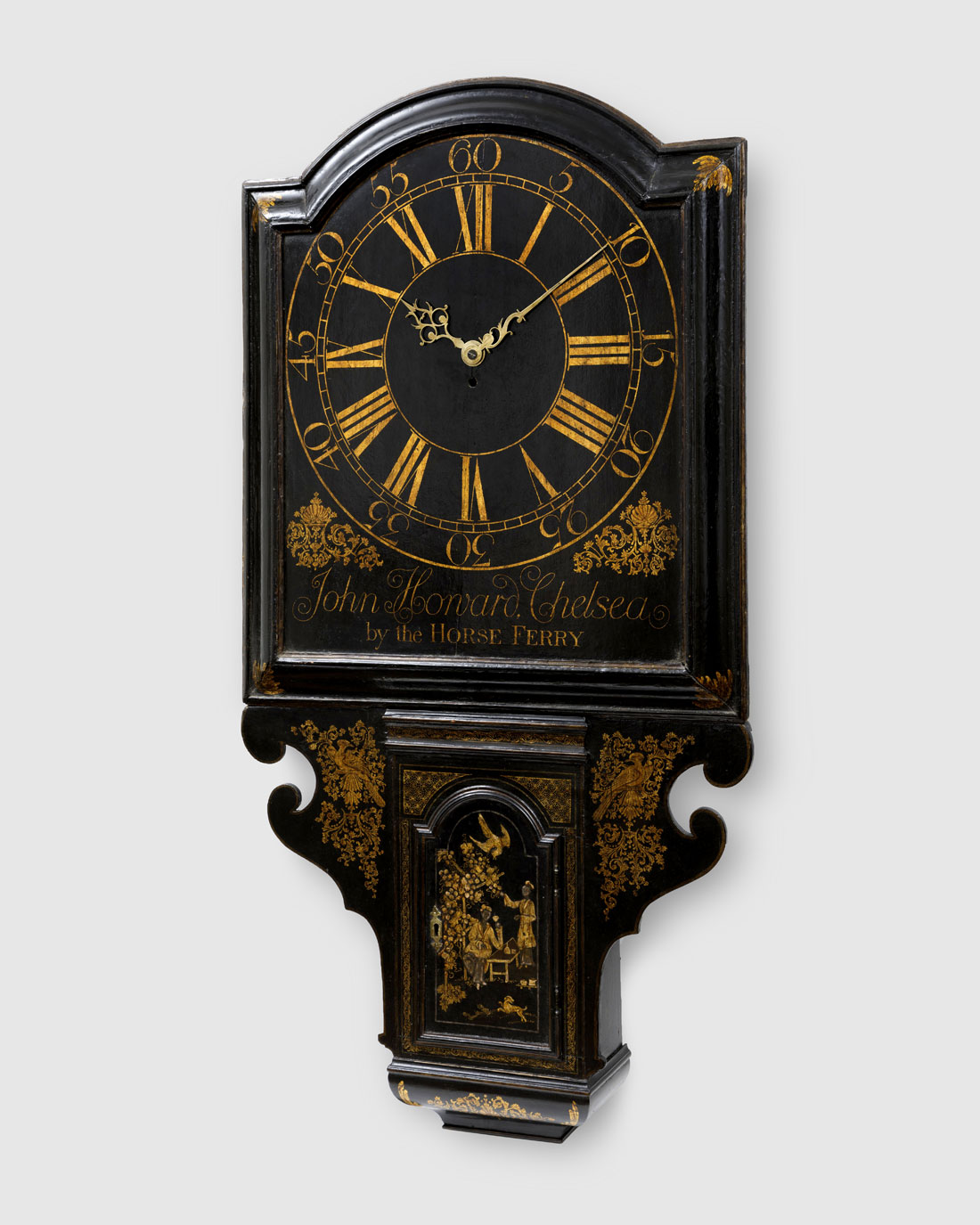
A very rare grand George II period black and gilt chinoiserie tavern clock with early shield-shaped dial and weight-driven movement by this little known Chelsea maker.
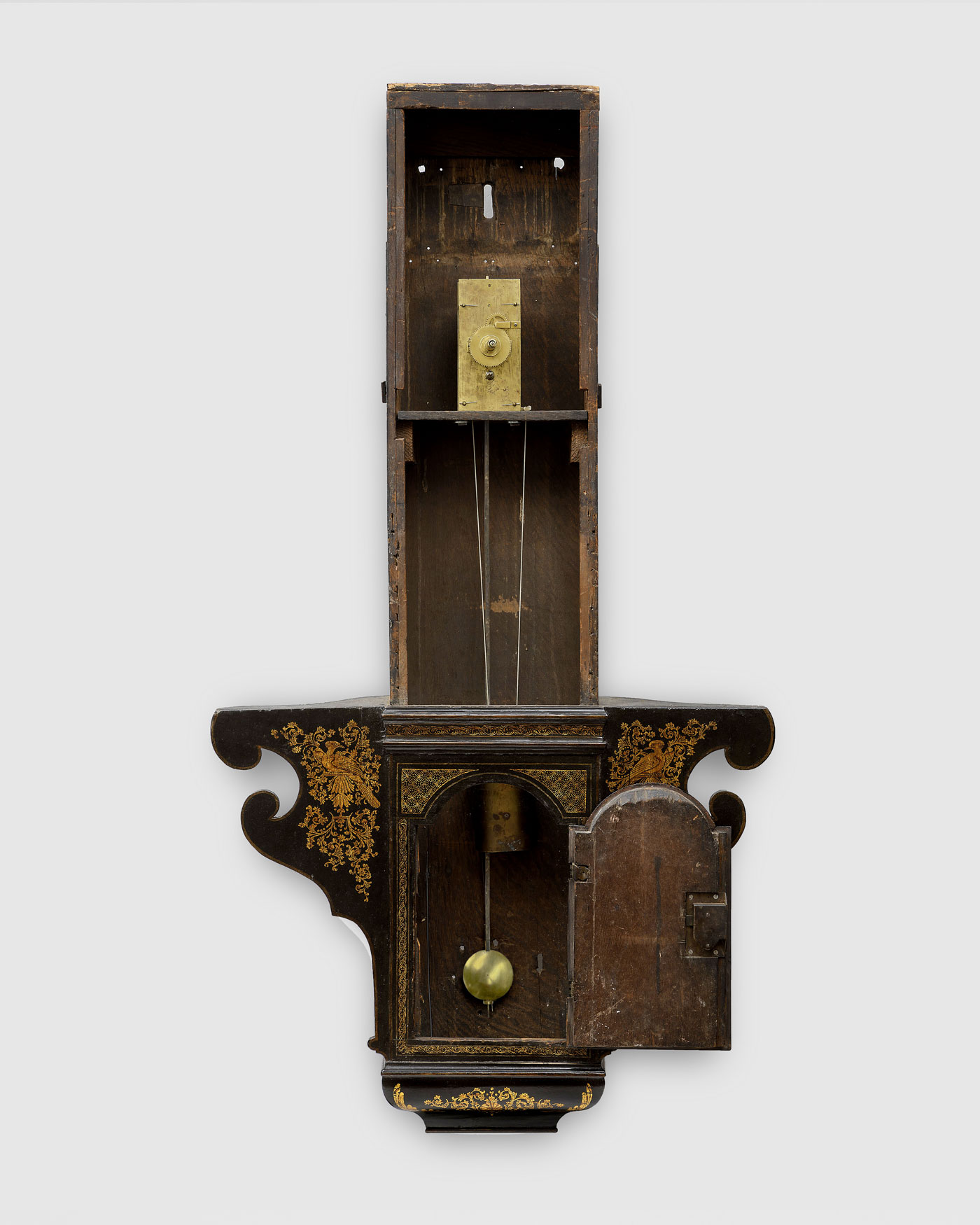
The case is of characteristic early tavern-clock form in black lacquer, richly heightened with gilt chinoiserie. It has a break-arch moulded door to the upper section, the arch and quarter quadrants picked out with gilt hatching and scrollwork. Within the panel there is a finely painted garden scene of oriental figures at a table, surrounded by cherry blossom, birds in flight and a small dancing dog to the lower right, all enclosed by a shallow gilt line border and centred on a chased brass door escutcheon. A particularly rare feature is the double scrolling ears to each side, decorated with gilt floral sprays and small nesting birds, leading down to the shaped lower section and moulded base, which carries matching gilt foliate ornament. The whole has great depth of colour and an honest patina consistent with its age.
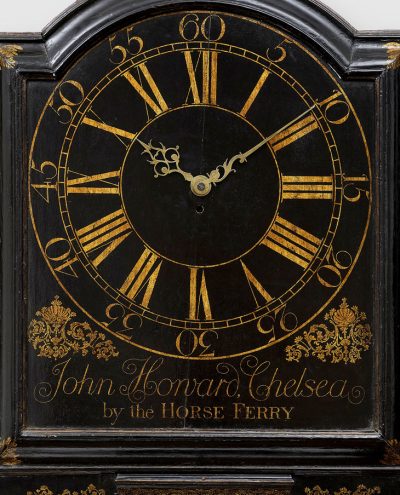
The large shield-shaped wooden dial, approximately 31 ½ x 36 inches, is painted black with gilt chinoiserie ornament to the border and lower panel. It has a bold circular chapter ring with Roman hour numerals and large Arabic five-minute figures within a double gilt minute band, the outer ring embellished with single leaf motifs at the minute divisions. It has bold pierced brass hands, while the lower portion of the dial is framed by leaf-scroll spandrels and carries the maker’s name in a flowing two-line signature John Howard Chelsea by the Horse Ferry.
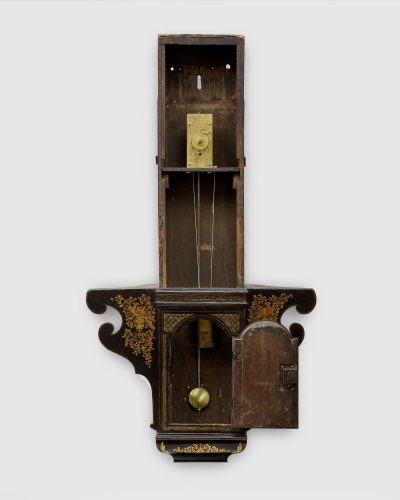
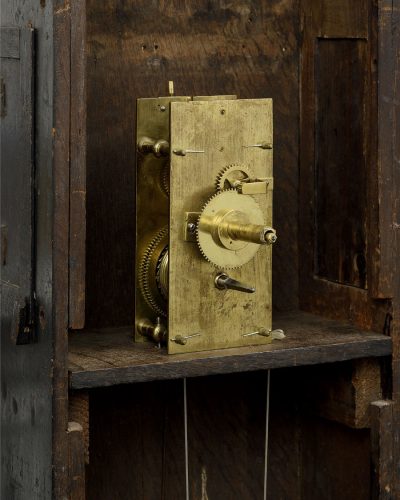
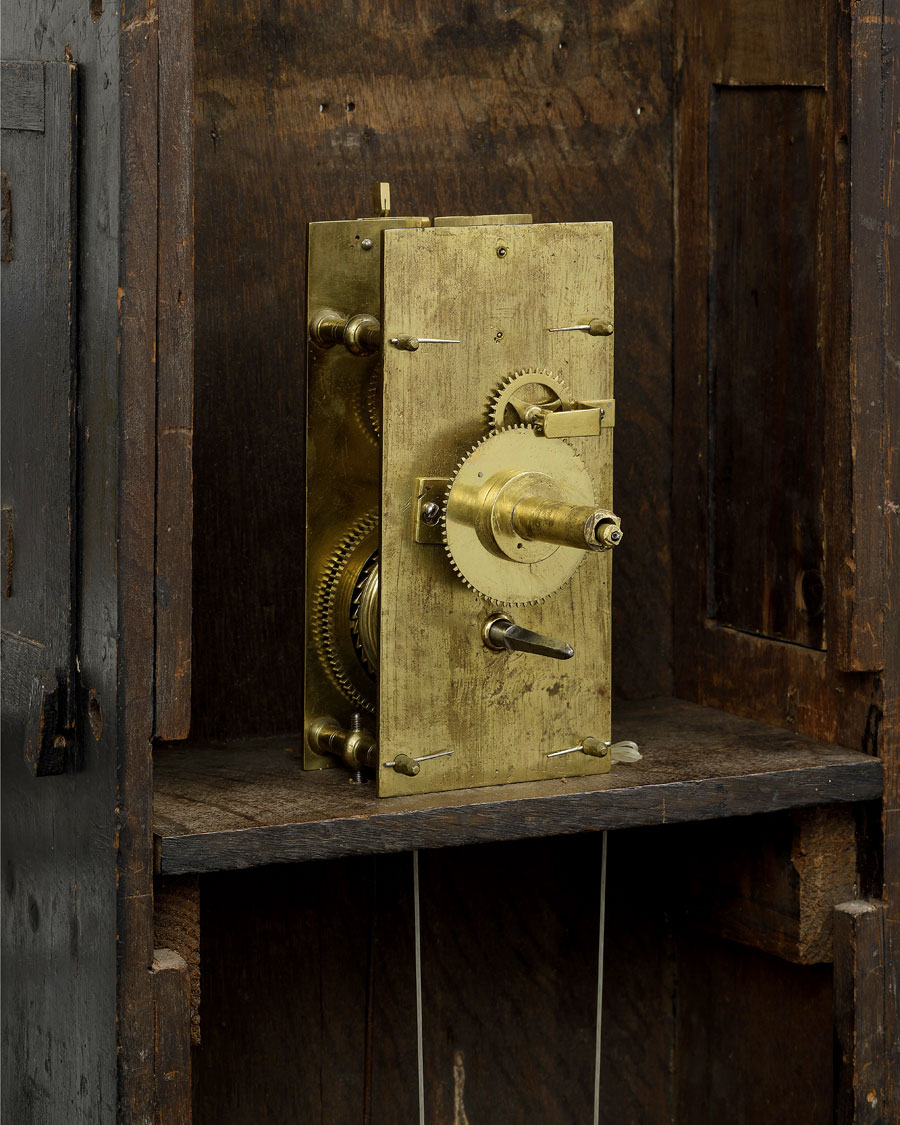
The plated 8-day movement is of early rectangular form, united by four baluster pillars pinned at the front plate. It has an anchor escapement with a steel strip pendulum rod and lead-filled brass bob, driven by a single gut line over a pulley to an oval brass-cased lead weight.
Date: circa 1735
Height: 61 ½ in (156 cm)
We know surprisingly little about John Howard who made this extraordinary early tavern clock. His exotic address ‘by the Horse Ferry’ and his work are not previously recorded to our knowledge. He was the brother of the Quaker clockmaker and gardener Edmund Howard (1710 – 1788) who kept a remarkable diary of his life at the time and the untimely death of John ‘of a fever’ in 1742. Edmund records having to take over John’s business, shop and work tools somewhat reluctantly after that.
References: Antiquarian Horology Journal N° 4, Vol 38, September 2017, James Nye,
Edmund Howard (1770 – 1798) A Quaker Clockmaker in Chelsea.
HW6610

123 Kensington Church Street, London W8 7LP | +44 (0) 20 7938 1100 | info@howardwalwyn.com
Copyright © 2025 Walwyn Antique Clocks
You have not viewed any products yet.